Why Neobank Apps Like Revolut Are Replacing Traditional Banking
The global banking industry is changing faster than ever. Customers no longer want slow onboarding, complex paperwork, hidden fees, or limited banking access tied to physical branches. Modern users expect instant payments, real-time account control, digital cards, international transfers, budgeting tools, and mobile-first financial experiences.
This shift is one of the biggest reasons why neobank apps like Revolut are rapidly replacing traditional banking models across global markets.
In 2026, digital banking is no longer considered an alternative. For many users, it has become the preferred financial experience.
From freelancers and remote workers to international travelers and digital-first businesses, users increasingly prefer fintech platforms that provide speed, transparency, flexibility, and complete mobile accessibility.
This growing demand is also pushing startups and entrepreneurs toward Revolut clone app development to enter the expanding digital banking ecosystem.
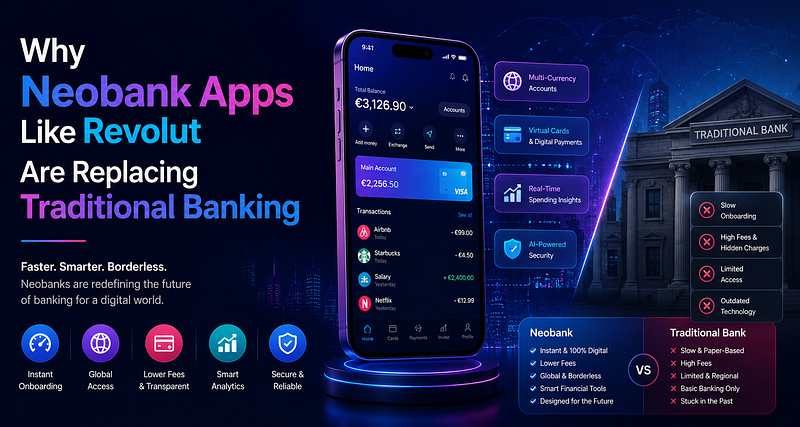
The Rise of Mobile-First Banking
Traditional banks were built around physical infrastructure:
- Branch networks
- Manual paperwork
- Long approval systems
- Limited banking hours
- Region-specific operations
Neobanks completely changed this model.
Modern digital banking platforms operate through:
- Mobile apps
- Cloud infrastructure
- AI-driven automation
- Real-time financial systems
- Instant onboarding workflows
This mobile-first approach gives users full banking control directly from their smartphones.
Users can now:
- Open accounts instantly
- Send international transfers
- Manage cards
- Track expenses
- Invest money
- Handle subscriptions
- Freeze or unfreeze cards
- Monitor transactions in real time
All without visiting a physical bank.
Faster Account Creation and Onboarding
One of the biggest frustrations with traditional banks is slow onboarding.
Many banks still require:
- Physical branch visits
- Paper documentation
- Long verification processes
- Manual approvals
Neobank apps simplified this experience dramatically.
Modern fintech platforms now support:
- Digital KYC verification
- AI-assisted identity checks
- Instant document uploads
- Automated approvals
- Virtual card generation
Users can often create and activate accounts within minutes.
This speed improves customer acquisition while reducing operational overhead for the platform itself.
For startups entering fintech, fast onboarding has become a critical competitive advantage.
Lower Fees and Better Financial Transparency
Traditional banking systems often involve:
- Hidden transaction charges
- High international transfer fees
- Currency conversion markups
- Maintenance fees
- Delayed transaction visibility
Neobank platforms became popular largely because they introduced transparent pricing structures.
Users now expect:
- Real-time exchange rates
- Low-cost international transfers
- Transparent fee breakdowns
- Instant transaction notifications
- Better financial visibility
This transparency builds trust and improves user retention.
For digital-first consumers, pricing clarity matters as much as the banking functionality itself.
Multi-Currency and Global Banking Features
The modern economy is increasingly global.
Freelancers, remote teams, creators, and businesses now regularly handle:
- International payments
- Cross-border transfers
- Multi-currency transactions
- Global subscriptions
Traditional banking systems often struggle to provide smooth global financial experiences.
Neobank platforms solve this by supporting:
- Multi-currency wallets
- Instant currency exchange
- International virtual cards
- Borderless payments
- Crypto integrations
- Global spending controls
These features make digital banking apps far more attractive to modern users.
Real-Time Financial Control
One major reason users prefer neobanks is control.
Traditional banks usually offer limited customization and delayed transaction visibility.
Modern neobank apps provide:
- Instant payment alerts
- Spending analytics
- Budget tracking
- Subscription management
- Card freezing
- ATM withdrawal controls
- Merchant restrictions
- Real-time balance updates
This creates a more interactive and intelligent banking experience.
Users feel connected to their finances instead of waiting for delayed account updates.
AI and Automation in Digital Banking
AI is becoming one of the strongest advantages for fintech platforms.
Neobank apps now use AI for:
- Fraud detection
- Smart budgeting
- Spending analysis
- Personalized financial insights
- Customer support automation
- Risk assessment
- Transaction monitoring
These systems improve both security and user experience.
AI-driven automation also reduces operational costs while helping platforms scale more efficiently.
Traditional banks often struggle to adapt quickly because of legacy infrastructure and outdated internal systems.
Better User Experience and App Design
User experience is one of the biggest differences between traditional banks and neobanks.
Most traditional banking apps were built as extensions of offline banking systems.
Neobank platforms were designed specifically for mobile users from the beginning.
This results in:
- Faster navigation
- Cleaner interfaces
- Simplified financial actions
- Better accessibility
- Personalized dashboards
- Modern UI/UX experiences
Digital users now expect financial apps to feel as smooth as social media or ecommerce platforms.
The banking experience itself has become a major factor in customer retention.
Virtual Cards and Digital Payments
Cashless transactions continue to dominate global commerce.
Neobank apps support:
- Virtual debit cards
- Digital wallets
- QR payments
- NFC payments
- Online payment security
- Disposable virtual cards
These features improve both convenience and payment security.
Users increasingly prefer platforms that integrate seamlessly with digital commerce ecosystems.
Traditional banking systems often take longer to introduce these innovations due to compliance complexity and infrastructure limitations.
Why Startups Are Building Revolut-Like Platforms
The success of neobanks has created strong opportunities for fintech startups.
Many entrepreneurs now explore Revolut clone app development because digital banking demand continues growing globally.
A modern Revolut clone platform can support:
- Digital wallets
- International transfers
- Multi-currency accounts
- Expense tracking
- Card management
- Crypto modules
- Subscription systems
- Business banking features
Instead of building every system from scratch, startups often choose ready-made fintech frameworks to accelerate launch timelines.
This helps reduce technical complexity while allowing customization around branding, compliance workflows, and regional financial requirements.
Security and Compliance Remain Critical
As fintech adoption grows, security becomes even more important.
Modern neobank platforms require:
- End-to-end encryption
- Fraud monitoring
- Secure authentication
- Device verification
- Transaction monitoring
- Regulatory compliance workflows
- KYC and AML systems
Users trust digital banking platforms only when security and transparency are strong.
Fintech growth depends heavily on maintaining this trust at scale.
The Future of Banking Is Digital
The shift toward digital banking is not temporary.
Younger users especially prefer:
- Mobile-first financial management
- Faster payments
- Digital budgeting
- Flexible financial tools
- Transparent banking systems
Traditional banks are now forced to modernize rapidly because user expectations continue evolving.
Meanwhile, fintech platforms continue expanding into:
- Insurance
- Investments
- Crypto services
- Business banking
- Financial automation
- AI-driven personal finance
The line between banking apps and financial ecosystems is disappearing.
Why Businesses Are Choosing Ready-Made Fintech Solutions
Building a fintech platform completely from scratch requires:
- Large engineering teams
- Security expertise
- Compliance infrastructure
- Scalable backend architecture
- Payment integrations
This is why many businesses now prefer ready-made neobank solutions.
Miracuves provides scalable Revolut clone app solutions designed for entrepreneurs looking to launch modern digital banking platforms with advanced fintech features, mobile-first architecture, payment systems, and customizable financial workflows.
Final Thoughts
Neobank apps like Revolut are replacing traditional banking because they align with how modern users manage money today.
Customers now expect:
- Instant financial access
- Transparent pricing
- Real-time control
- Mobile-first experiences
- Global payment flexibility
- Intelligent financial tools
Traditional banking models built around physical infrastructure struggle to match this speed and flexibility.
As digital banking adoption continues growing in 2026, fintech startups have a major opportunity to build next-generation financial platforms focused on convenience, automation, scalability, and user experience.
FAQs
1. What is a neobank app?
A neobank app is a digital-first banking platform that operates primarily through mobile applications without relying heavily on physical branches.
2. Why are neobank apps becoming popular?
Users prefer neobank apps because they offer faster onboarding, lower fees, real-time financial control, and better mobile experiences.
3. How do apps like Revolut make money?
Neobank platforms generate revenue through subscriptions, interchange fees, premium services, international transfers, and financial partnerships.
4. What features are important in a Revolut clone app?
Important features include multi-currency wallets, card management, instant transfers, analytics, virtual cards, and AI-driven security systems.
5. Are neobank apps secure?
Modern neobank platforms use encryption, fraud monitoring, secure authentication, and compliance systems to protect user accounts and transactions.
6. Why are startups building Revolut-like apps?
Digital banking demand continues growing globally, creating opportunities for fintech startups to launch modern financial platforms.
7. Can neobank apps support international payments?
Yes. Most neobank apps support international transfers, multi-currency wallets, and global payment systems.
8. Why are traditional banks struggling against neobanks?
Traditional banks often operate on older infrastructure, slower systems, and branch-based models that are less flexible than modern fintech platforms.
Comments
Post a Comment